
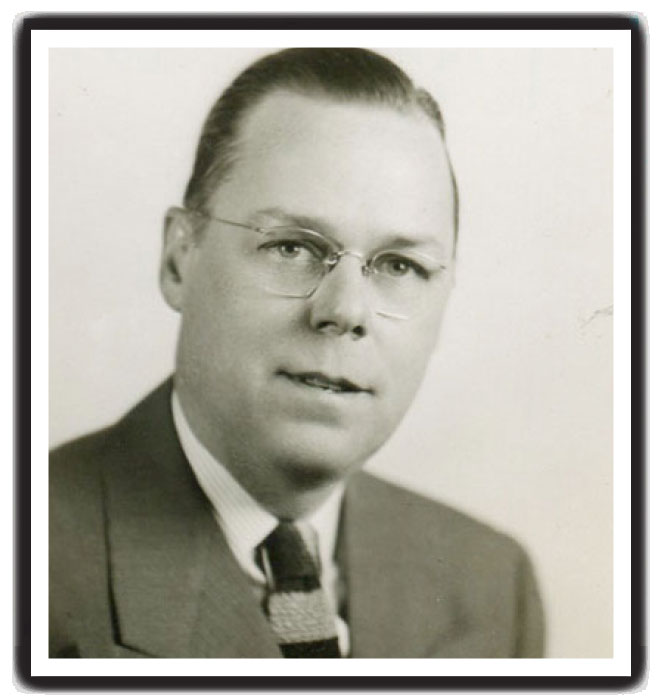
Charlie Smith
Teacher, Administrator
Charles E. Smith was born in Church Hill, Maryland, in 1907. He graduated in 1928 from Washington College in Chestertown, Maryland, with a mathematics degree. He earned a master’s degree from Duke University in 1940. Beginning in 1928, he taught math at the original William Penn High School (WPHS), then located in what became the Arsenal on the Green. He was named the first principal of WPHS in 1946, and remained Principal until his retirement in 1972, a period of 26 years. From 1975 to 1977, he served as the Director of the Delaware Division of Social Services.
His accomplishments were many, but teaching students was his first love. As he said in an interview in 1972, “What good would it do if I taught them all the math and they grew up to be embezzlers?” Even as principal, he often tutored in mathematics after school to help struggling students.
He not only served his school, he served his country and community in many ways. He served in the Army in World War II, surviving the London blitz. He was a faithful member of the New Castle Methodist Church, serving as President of the Board of Trustees, Sunday School Superintendent, and Chairman of the church’s Administrative Board. He sang tenor in the choir, and was a member of a men’s quartet that sang there and elsewhere. He was affiliated with the Boy Scouts of America, and was a president and member of the New Castle Rotary Club for many years.
In addition, Mr. Smith was a President of the Delaware Association of School Administrators and the Wilmington Suburban Principals Association. He was elected to, and president of, the Middle States Association of Colleges and Secondary Schools, and traveled for numerous evaluating committees for high schools in the area. In 1967, he was elected to life membership in the Headmasters Association, as a measure of his peers’ esteem.
Most importantly, Smith was a kind, honest, decent man who came from humble roots and never forgot it. He was a wonderful neighbor in his community, whether in good times or trouble. Over his office door, there was a sign that read, “I complained that I had no shoes, until I met a man who had no feet.” He never forgot that there were always others who were worse off than he, and made it a central tenet of his life to take care of those in need.